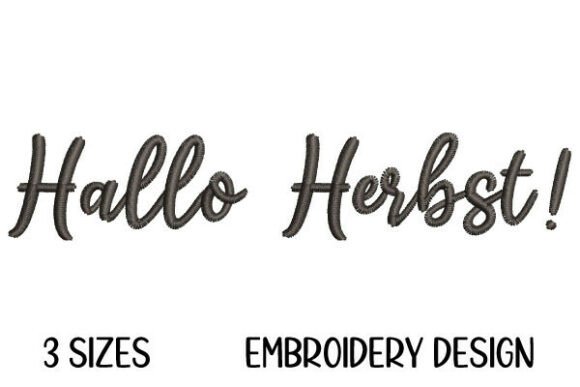
Hallo Herbst – Autumn: A Designer Review for Business Merch
As an embroidery designer focused on commercial applications and small business merchandise, I approach every new digitization with a specific set of criteria. It is not enough for a design to simply look pretty on a screen; it must perform mechanically on fabric and serve a strategic purpose for the brand. When evaluating the Hallo Herbst – Autumn machine embroidery design, my primary focus is its viability for seasonal retail collections, café branding, and handmade product lines. This review breaks down the technical performance and commercial utility of this flowing script design for professional decorators and business owners.
Visual Personality and Brand Alignment
The first impression of Hallo Herbst – Autumn is undeniably warm and inviting. The description highlights a "flowing script style," which immediately signals a specific brand personality. For small businesses, typography in embroidery acts as a voice. This particular script suggests a boutique, artisanal, or cozy aesthetic rather than a corporate or industrial one. It feels handmade yet polished, striking a balance that is essential for modern brand identity.
For a local bakery, florist, or coffee shop, this design communicates seasonality without being cliché. It avoids the overly cartoonish pumpkin graphics often found in hobbyist files, opting instead for elegant lettering that respects the intelligence of the customer. As a designer, I appreciate when a digital embroidery file prioritizes legibility alongside decoration. The German phrase „Hallo Herbst“ adds a layer of cultural specificity or European charm that can differentiate a shop’s merchandise from generic big-box store decor. However, business owners must ensure this linguistic choice aligns with their local demographic and brand story before committing to production.
Commercial Applications for Seasonal Merchandise
In a real-world business scenario, versatility is key. You need design assets that work across multiple SKUs. Based on the flowing nature of this design, here is how I evaluate its application for various small business merch:
- Apron Embroidery: This is arguably the strongest use case. Placed on the left chest of a canvas apron, the script provides a sophisticated seasonal update for staff uniforms without requiring a full rebrand. The vertical space typically available on aprons accommodates flowing scripts well.
- Tote Bag Design: For retail shops selling autumn goods, this design serves as an excellent limited-edition mark. On natural cotton canvas, the warm thread colors mentioned in the description will pop, creating a high-perceived-value handmade product feel.
- Custom Apparel: On sweatshirts or cardigans, the design works beautifully as a center-chest motif. The cozy vibe matches the garment type perfectly, encouraging customers to wear the merchandise outside of the shop, effectively acting as walking advertising.
- Product Packaging Accents: Smaller versions of this design could be stitched onto fabric tags or reusable gift wrap, elevating the unboxing experience for e-commerce sellers.
Technical Considerations and Production Risks
While the aesthetic is appealing, a professional embroiderer must consider the mechanics. Flowing scripts are notoriously tricky in commercial embroidery because they rely heavily on satin stitches and precise registration. Here are the critical technical factors to review before running Hallo Herbst – Autumn on client goods:
Stitch Density and Fabric Texture
Script fonts require smooth surfaces to maintain crisp edges. If you plan to use this on textured fabrics like fleece, terry cloth, or heavy knits, the fine details of the flowing script may get lost or sink into the pile. In these cases, you must adjust your stabilizer strategy. A cutaway stabilizer is likely mandatory to prevent distortion, and a water-soluble topping might be necessary to keep the stitches sitting on top of the fabric nap. Always test on the exact fabric texture you intend to sell; what works on a smooth twill cap may fail on a ribbed knit beanie.
Sizing Limitations for Patches and Caps
The description notes a "flowing" style, which implies horizontal width. This presents challenges for embroidered patch production if the patch needs to be small. Reducing a complex script too much results in thread buildup and illegible letters. Before using this for small patches or sleeve details, verify the minimum safe size. Similarly, for cap embroidery, the curvature of the hat combined with the horizontal span of the text requires careful hooping and potentially a specialized cap backing. Do not assume the file scales infinitely downward without testing.
Thread Color Contrast and Washability
Autumn palettes often involve oranges, rusts, and browns. While beautiful, these mid-tone colors can lack contrast against certain garment bases. If stitching on dark brown or black uniforms, ensure the thread colors selected have sufficient luminance to remain readable at a distance. Furthermore, consider the end-use. If this is for staff uniforms or children's wear that requires frequent washing, verify that the recommended threads are colorfast and that the stitch structure can withstand industrial laundering without fraying.
Impact on Customer Trust and Product Value
Why invest in a specific seasonal design like Hallo Herbst – Autumn rather than a generic leaf icon? Specificity builds trust. When a customer sees thoughtfully curated seasonal branding, it signals that the business is active, current, and attentive to detail. High-quality embroidery implies permanence and quality. Unlike screen printing, which can crack or fade, a well-executed finished product retains its value.
However, poor execution damages that trust. If the script is bunched, misaligned, or puckered due to improper stabilization, it reflects negatively on the business. Using this design correctly enhances the perceived value of the merchandise, allowing for higher price points on Etsy or in-store. It transforms a standard tote bag or sweatshirt into a collectible seasonal item, driving urgency and buyer engagement.
Designer Notes for Pre-Production Testing
Before launching a collection featuring Hallo Herbst – Autumn, I strongly advise following this professional checklist to ensure commercial success:
- Verify Licensing: Confirm the embroidery file includes commercial licensing for merchandise sales. Personal use licenses do not cover branded retail products.
- Create a Printable Mockup: Use software to overlay the design on photos of your actual blanks. This helps visualize placement and scale before wasting materials.
- Test in Monochrome: Run a sample in single-color black or white thread first. This reveals structural issues in the digitizing that multi-color runs might hide.
- Check Hoop Size Compatibility: Ensure the design dimensions fit comfortably within your machine’s maximum sewing field with adequate margin for hoop clearance.
- Assess Spacing: Inspect the kerning between letters. In flowing scripts, connecting points are stress areas. Reinforce them if the test run shows separation.
- Compare Beside Other Assets: Place this design next to your existing logo. Does the weight and style clash? Visual consistency is vital for professional custom apparel.
Hallo Herbst – Autumn offers significant potential for businesses looking to capture the seasonal market with elegance. By treating it as a professional asset rather than just a decorative element, and by respecting the technical requirements of script embroidery, shop owners can create merchandise that truly resonates with their audience. Always prioritize testing and quality control to ensure the final embroidered piece honors both the design and your brand reputation.