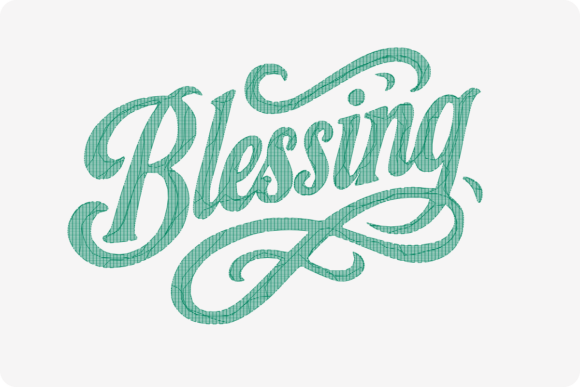
Blessing Script Lettering: A Designer’s Review
As an embroidery designer who has stitched out thousands of files for custom orders, I approach every new machine embroidery design with a mix of excitement and healthy skepticism. When planning inventory for the upcoming season of personalized gifts, I recently tested the Blessing Script Lettering to see if it truly lives up to its promise of adding beauty and charm. For those of us running small shops or managing Etsy listings, a font isn't just a collection of stitches; it is the voice of the personalized gift we are selling. After running several test sew-outs across different substrates, here is my honest assessment of how this design performs in a real-world production environment.
First Impressions and Emotional Resonance
The immediate mood of Blessing Script Lettering is undeniably warm and nostalgic. Unlike rigid block fonts or overly ornate baroque scripts that can feel stiff on modern textiles, this design strikes a balance between classic elegance and handmade sweetness. It feels intentional, evoking the sentimentality required for items categorized under Family Friends. When I first loaded the embroidery file, the flow of the lettering suggested it would be particularly effective for emotional projects rather than utilitarian branding.
For an Etsy seller or small shop product creator, this aesthetic is gold. Customers browsing for meaningful keepsakes are often looking for typography that feels human and gentle. This script delivers that perceived value instantly. It does not look like a factory-stamped label; it looks like a thoughtful addition to a handmade product. The charm lies in its readability combined with a soft, rhythmic baseline that mimics high-quality hand penmanship, making it ideal for connecting emotionally with buyers seeking connection through thread.
Ideal Applications for Personalized Gifts
During my testing phase, I envisioned specific customer scenarios where Blessing Script Lettering would shine as a finished product. Its versatility makes it a workhorse for several key categories in our industry.
- Baby Embroidery: This is perhaps the strongest use case. The script is gentle enough for nursery decor and baby blankets without being so childish that it limits the item's lifespan. I found it perfect for stitching names or dates on receiving blankets, where the goal is heirloom quality.
- Wedding Gift Keepsakes: For bridal parties, this lettering adds a touch of romance to pillow covers, ring bearer pillows, and custom tote bags. It elevates the item from a simple accessory to a cherished memory.
- Home Decor and Kitchen Textiles: While delicate, it holds its own on aprons and tea towels when stabilized correctly. It transforms a standard kitchen textile into a bespoke piece, perfect for housewarming gifts.
- Craft Fair Products: For sellers preparing for markets, this design allows for quick personalization on pre-made blanks. Because the style is universally appealing, it reduces the risk of unsold inventory compared to niche novelty fonts.
Navigating Fabric Texture and Technical Limitations
While the aesthetic appeal is high, practical application requires caution. As experienced embroiderers know, a beautiful screen view does not always translate to a perfect stitch-out on challenging materials. Blessing Script Lettering demands respect for fabric texture and proper preparation.
Challenges with Thick and Stretchy Fabrics
If you plan to use this for an embroidered towel or terry cloth, you must be vigilant. Script fonts rely on smooth satin columns to maintain their legibility. On high-pile fabrics, the stitches can sink, causing letters to disappear or look jagged. I strongly recommend using a water-soluble topping and a heavy-duty stabilizer to create a flat surface for the needle. Without this, the "blessing" becomes a frustrating tangle of thread.
Similarly, stretchy baby clothes present a hurdle. Knits move while hooping and stitching. If the stitch density is too high for the fabric weight, you risk puckering or distorting the garment. Always test on a scrap of the exact material you intend to use. For onesies or stretchy blankets, consider using a cut-away stabilizer rather than tear-away to support the flexible nature of the knit during and after washing.
Size and Detail Considerations
Every script has a minimum viable size. Before accepting a rush order for a small tag or cuff, verify the smallest readable dimension of Blessing Script Lettering. Reducing script designs too aggressively can cause jump stitches to become visible or inner loops to fill in completely. Check your hoop size limitations as well; ensure the design fits comfortably within your hoop’s safe stitching area to avoid registration issues at the edges.
Commercial Viability and Customer Trust
For those of us in commercial embroidery, the bottom line matters. Does this design justify the price point? Absolutely, provided it is marketed correctly. High-quality typography signals professionalism. When a customer receives a finished product with crisp, beautiful lettering, their trust in your brand solidifies. They are more likely to return for future holidays and recommend your shop to friends.
Furthermore, this design enhances product photography. In digital sales, the photo is the product. Blessing Script Lettering photographs beautifully because of its balanced spacing and clear contrast potential. When creating a printable mockup or listing photo, ensure you showcase the design on both light and dark backgrounds. Thread colors behave differently against various fabric shades; a white thread on cream linen reads differently than gold thread on navy velvet. Showing these variations helps manage customer expectations and reduces returns due to color mismatch.
Essential Pre-Production Checklist
Before you list this digital embroidery file for sale or use it on a paid commission, run through this practical checklist to ensure success:
- Verify Licensing: Always confirm the commercial licensing terms included with the file. Ensure you have the right to sell finished products or the digitized file itself, depending on your business model.
- Test Stitch Density: Run a sample on your target fabric. If the fabric is lightweight, check for perforation or tearing along the stitch lines. If it is heavy, check for coverage gaps.
- Thread Color Contrast: Test low-contrast combinations (e.g., tone-on-tone) to ensure the script remains legible. Sometimes a subtle shade difference looks elegant on screen but vanishes in natural light.
- Stabilizer Match: Document which stabilizer worked best for each fabric type. This saves time during reorders and ensures consistency across multiple custom embroidery projects.
- Check Small Details: Inspect the serifs and connecting tails after stitching. These are the first areas to fail if tension is off or if the design was resized improperly.
Final Thoughts for Makers and Sellers
Blessing Script Lettering is a valuable asset for any embroidery business focusing on sentimental, family-oriented goods. It bridges the gap between traditional craftsmanship and modern personalization trends. Whether you are creating a wedding gift, a nursery staple, or a seasonal bestseller, this design offers the emotional hook that turns casual browsers into loyal customers.
However, treat it with the technical respect it deserves. Success with this machine embroidery design comes from understanding its interaction with different textiles and respecting its structural limits. By combining its inherent charm with rigorous testing and professional finishing, you can confidently offer products that truly bring a touch of beauty to your customers' lives. Remember, in our industry, the quality of the lettering is often the first thing a recipient touches and the last thing they remember. Make it count.